Shoot One: Macro photography
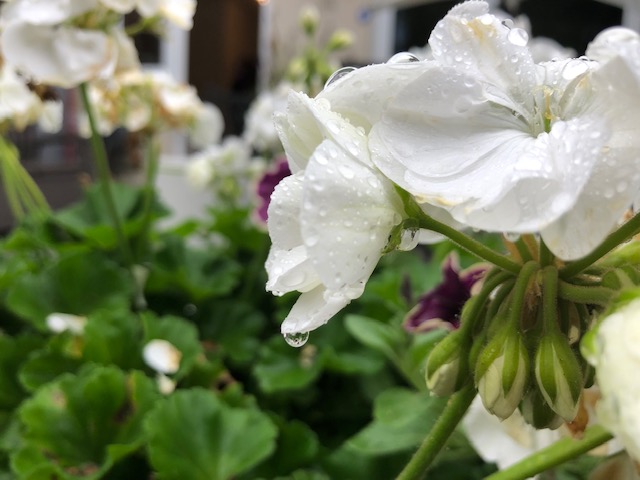
The inspiration for this style of photography is from exploring different environmentalist campaigns. A relevant topic in today's society, environmental damage is something important to be explored through photography.
Contact Sheet:
Analysis:
Final Images:
Friday, September 27, 2019
Friday, September 13, 2019
Multiple Exposure Photography
Multiple Exposure: A photography technique of combining two or more separate exposures into one.
Image Bank:


These images have inspired me to explore this technique myself. The element of movement is highly focused on and leads the pictures to having a deeper meaning. As I would like to focus on nature in my personal investigation, this technique could be useful when exploring human form. Expressive poses could make some interesting photographs as well as showing high skill. If I wanted to add a more traditional style of "nature" into the shoots, I could look into using things such as leaves, feathers or water as well as humans.
How To Do:
1 - Find the correct camera settings for the dark room.
2 - Set up tripod and lighting.
3 - Decide where you want the subject throughout the shot.
4 - Block out all light.
5 - Shoot whilst flashing the light as many times as you can in the capture time.
My Images:
I used a 4s shutter speed, aperture of 8 and a 800 iso to take my images. I used a Tripod, Camera, Snoot light and Softboxes. After setting up my equipment and camera settings, I asked my models to display happy emotions. The photos I took have been a good start on this technique and allowed me to explore it for myself and therefore persue it later in my investigation. I think that for the first images, these have turned out well. I will consider using this technique in my personal investigation shoots. To improve the images, I could try out using less or more exposures as well as experimenting with different poses or subjects.


Image Bank:


These images have inspired me to explore this technique myself. The element of movement is highly focused on and leads the pictures to having a deeper meaning. As I would like to focus on nature in my personal investigation, this technique could be useful when exploring human form. Expressive poses could make some interesting photographs as well as showing high skill. If I wanted to add a more traditional style of "nature" into the shoots, I could look into using things such as leaves, feathers or water as well as humans.
How To Do:
1 - Find the correct camera settings for the dark room.
2 - Set up tripod and lighting.
3 - Decide where you want the subject throughout the shot.
4 - Block out all light.
5 - Shoot whilst flashing the light as many times as you can in the capture time.
My Images:
I used a 4s shutter speed, aperture of 8 and a 800 iso to take my images. I used a Tripod, Camera, Snoot light and Softboxes. After setting up my equipment and camera settings, I asked my models to display happy emotions. The photos I took have been a good start on this technique and allowed me to explore it for myself and therefore persue it later in my investigation. I think that for the first images, these have turned out well. I will consider using this technique in my personal investigation shoots. To improve the images, I could try out using less or more exposures as well as experimenting with different poses or subjects.
Wednesday, August 14, 2019
Illustrated Project Proposal
Conservation Photography: Conservation photography combines nature with the pro-active, issue orientated approach of documentary photography and could be used as a tool for change. Conservation photography uses the art of high-quality photography and story telling to elicit action that creates tangible and meaningful conservation measures. These images are often used to build awareness, influence policy and raise funds for organisations.
My
personal investigative study is to create a visual record of Nature in England. The investigation will explore “Landscapes and Wildlife” including wide angles landscapes, macro shots of plants and animals and some inclusion of people. The reason I intend to study wildlife is because techniques such as macro photography and sequencing have inspired many new ideas regarding different natural elements. I also intend to explore the negative side of England's landscapes eg litter to create depth and contrast in my project.
Photographer’s research:
- Art Wolfe
- Art Wolfe
This image displays the wide angle technique that I intend to use in my photographs. The photo shows a landscape of mountains with snow above ice caps in the sea. It could be interpreted as a pointer to climate change and the rising sea levels. There is a reflection of the mountains on the water with adds more detail to the image. I would like to recreate some work like this.
- Jacky Parker
This picture shows the macro photography style. Linking with my theme of nature, I intend to create images very similar to this. The focus on the subject contrasted with the blur of the background draws the eye into the desired area, making this a complex technique. Here, we see the flower in full focus and everything around it being heavily out of focus, this could reflect the dangerous behaviour of humans ignoring the damage they are doing but focusing on the things they are creating.- Duane Michals
Michals' sequences involve the subject of humans in a complex way. For example, this image shows a woman looking into a mirror in a sequence of images. It has undertones of insecurity and personal issues which are strongly conveyed through the sequencing style of photography. I will use this technique in my own work as it works well with nature. I could display different natural elements through the sequencing.The techniques I want to use in my work include:
- Wide Angles
- Sequencing
- Macro Photography
- Colour Saturation
- Blurring
- Reflections
- Computer Experiments
Tuesday, August 13, 2019
Animated Gif
Animated GIFs

These images were created by a photographer taking a series of still shots of the subjects and then compiling them together to make a loop which looks like a short animation. One of the main features in these images is the movement of water. This would work well with my theme of "nature". In the last image, the water perhaps signifies chaos and links with floods or natural disaster. With the couple in the middle holding hands, it could signify that their relationship is strong and that they are stronger than the water. Another idea that has been inspired by this technique is falling leaves either with or without a human subject. I would carry this out by having people throw leaves from the air whilst my subject stands in the back, out of focus. I would use short shutter speeds and compile the images together to make the animated gif.
Definition: Animated GIF photographs are a collection of still shots compiled together in a sequence to create a video like image.
Image Bank:

These images were created by a photographer taking a series of still shots of the subjects and then compiling them together to make a loop which looks like a short animation. One of the main features in these images is the movement of water. This would work well with my theme of "nature". In the last image, the water perhaps signifies chaos and links with floods or natural disaster. With the couple in the middle holding hands, it could signify that their relationship is strong and that they are stronger than the water. Another idea that has been inspired by this technique is falling leaves either with or without a human subject. I would carry this out by having people throw leaves from the air whilst my subject stands in the back, out of focus. I would use short shutter speeds and compile the images together to make the animated gif.
Equipment:
- Camera
- Tripod
- Moving Subject
- Desired Camera Settings
Tuesday, June 18, 2019
Macro Photograohy
Macro Photography:
Definition:
Extreme close-up photography, usually of very small subjects and living organisms like insects, in which the size of the subject in the photograph is greater than life size.
Equipment needed:
- Tripod
- Correct camera settings/Macro lens
- Subject
Camera Settings:
- Aperture between f/5.6 - f/11
- Manual Focus
- Shutter Speed 1/500" - 1/250"
- ISO 200/400
Image Bank:
These images are particularly interesting as they draw the viewers attention to a desired place by using focus. This technique tends to mostly be focused on natural elements such as plants, water or animals and so I will use it in my own investigation. An idea inspired by this work could be focusing on pieces of litter in a natural environment such as a forest to create a political awareness in my images. This would draw the eye to the negative effect we have on nature and blur out the trees/flowers/leaves in the background. This would link well as a contrast to my theme of nature and add some deeper meanings. I could also look at exploring different textures with macro photography. Close ups of leaves, flowers or animals would fit with my theme and would be something I'd like to explore.
Contact Sheet:
I took these images by using the above suggested settings on my camera to achieve the macro effect. Different angles were used for these images, mostly eye level. I believe that these images have turned out quite well, a lot of detail has been captured and they reflect the style shown in the image bank. I also like how the focus on one specific subject draws the eye to any desired point in the image. To improve these images I could experiment further with the settings or explore alternative camera lenses in order to really achieve the full effect of background blur. I could also include different subjects such as animals to make the pictures more interesting. In regards to the progression of the technique, I would heavily consider using this in my future work as there is a lot more experimenting which could be done and improvements to be made in regards to this technique.
Final Images:
Wide Angle & Telephoto Photography
Wide Angle & Telephoto Photography:
Image Bank:

Definition: This approach will render interesting outcomes as the lens distorts the foreground subject. Wide-angle lenses can be employed when shooting close-ups for a unique approach to working with foreground elements, unusual perspectives and extended depth of field. These combinations can create some of your most dynamic landscape images.

Equipment:
- Wide angle lens e.g. 18 mm – 24 mm.
- Tripod.
- Open space to photograph/Subject.
- Correct camera settings.

Camera Settings:
- Combine a wide angle of view with a deep depth of field by using an aperture of f/8 or smaller.
- ISO 200/400
- Shutter speed 1/250"
These images feature a wide angle view, typically of landscapes. I am interested in this technique as it would work well with my theme of nature. In the images, there seems to be a specific subject in the centre and then a landscape surrounding. I could use this in my own personal investigation and focus on a wide landscape with a person in the centre.
Contact Sheet:

These photographs were taken in a field/orchard where there was an open landscape for wide angle shots. I used a few different apertures to find the correct one for the shot but some of the images are still over exposed. The shutter speed used was 1/250". Overall, I think that these photos display some of the qualities found in the research images and feature a wide angle relating to my theme of nature. To improve this shot, I would use better camera settings as well as planning a more interesting shot. I might in the future set up a more interesting shot rather than trees in a landscape, such as finding layering hills. To improve these images, the first step would be to find the right view and consider a specific subject. In progression to this technique, I would consider using it in my personal investigation and further experiment.
My Images:
Tuesday, June 11, 2019
Sequencing Technique
Sequencing Technique:
What you Need:
- Tripod
- Fast shutter speed
- No camera shaking
- 200/400ISO
- Subject
These photographs are an interesting style which features many different shots being layered on top of each other to create one final piece. This technique has inspired me because I could use people as a subject and also incorporate other natural elements such as the moon, sun, clouds or animals. For example, I could set up my camera and tripod on a hill and take a shot of the moon every half an hour. This would result in me having many images of the moon throughout the night, leading to me being able to create the sequence shot. In addition to this, I could photograph people moving and sequence this.
The images were produced by using a fast shutter speed and by having the camera set up on a tripod facing the subject. This set up works well for sequencing shots as the movement on the swings can be captured.
The images look clear and show the movement in a sequence. If edited into a final outcome image, I think that it would mirror the research images style.
To improve the sequencing images, I could think of a more interesting shot or play with lighting/angles etc.
In the progression of this Technique, I would consider using it in future shoots. Sequencing shows time through photography and therefore leads the eye to think about the work and what the meaning behind it could be. Ideas where I could use this technique could be capturing someone laugh/cry or capturing something move fast such as a train or car.
Subscribe to:
Posts (Atom)